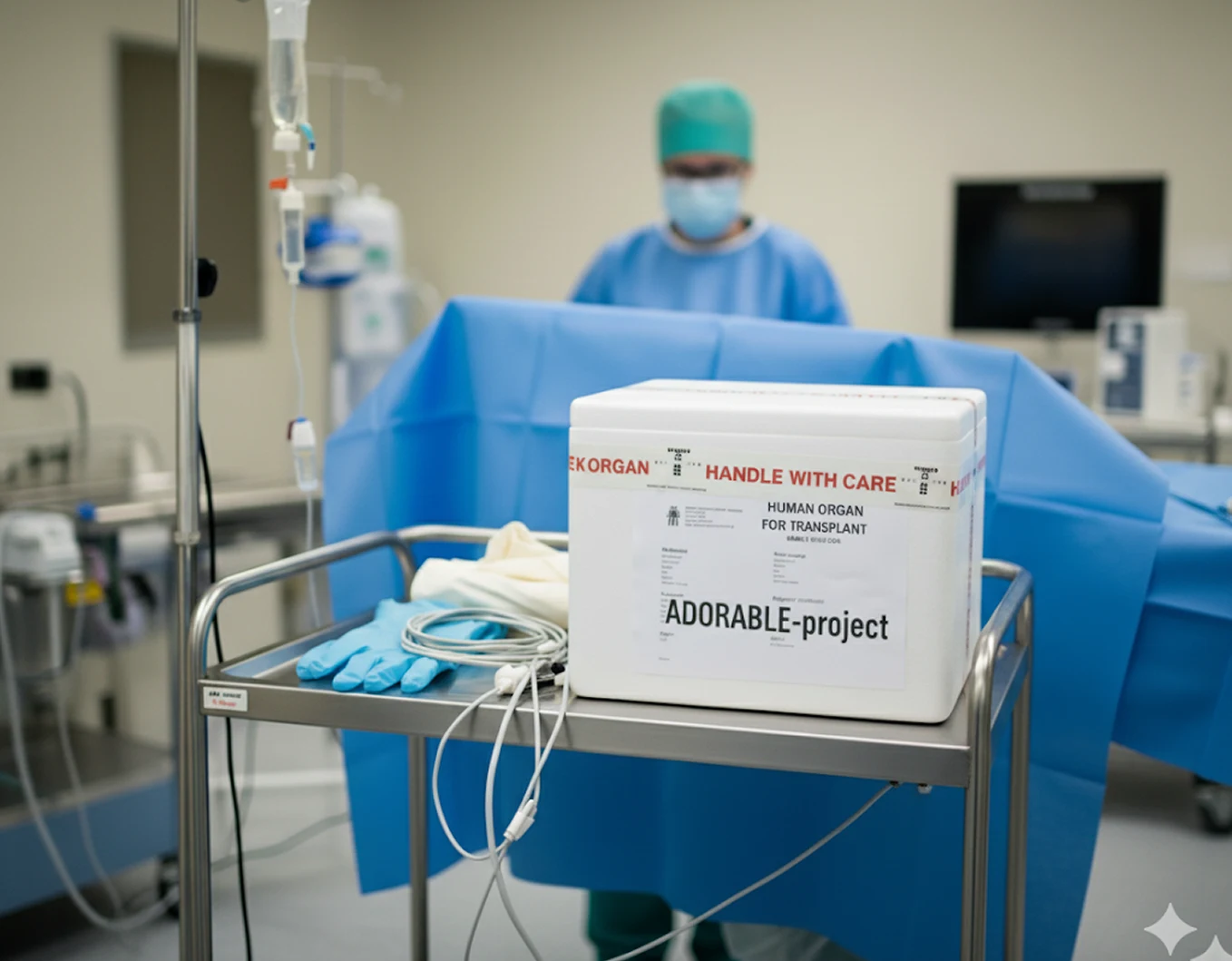

More than 25 organisations join forces in project ADORABLE, combining data and AI to better predict which donor kidney will last longest. Researchable is the technical backbone.
In brief
- In project ADORABLE, more than 25 organisations work together to better predict which donor kidney will last longest.
- Using biomarkers (traces in blood or tissue) and machine learning, the project estimates per patient which donor kidney works best.
- Researchable builds the technical backbone: secure data environments, predictive models, a secure API and the route to MDR/CE certification.
- The consortium is led by Martin de Borst (UMCG) and Dennis Hesselink, with partners such as Erasmus MC, the Nierstichting and the NTS.

The ADORABLE project has begun! In this project, more than 25 organisations work together to better help people with kidney problems. Researchable is proud to contribute as a data and AI specialist to a solution that every kidney patient will soon feel the difference of.
Not every donor kidney works equally well
Imagine you need a new kidney. Then it is important that doctors can accurately estimate which donor kidney will last longest. Right now that still relies heavily on experience and basic information, and that can be better. Sometimes a new kidney works for a short time, sometimes for a very long time. We want to make that more predictable.
Data and smart software
In ADORABLE, doctors, researchers and tech companies work together to explore how we can make better predictions using new forms of data and smart software. For example, we look at 'biomarkers': minuscule traces in blood or tissue that say something about the quality of a kidney. Together with smart computer programs (machine learning), this helps us to estimate ever more accurately what works best per patient.
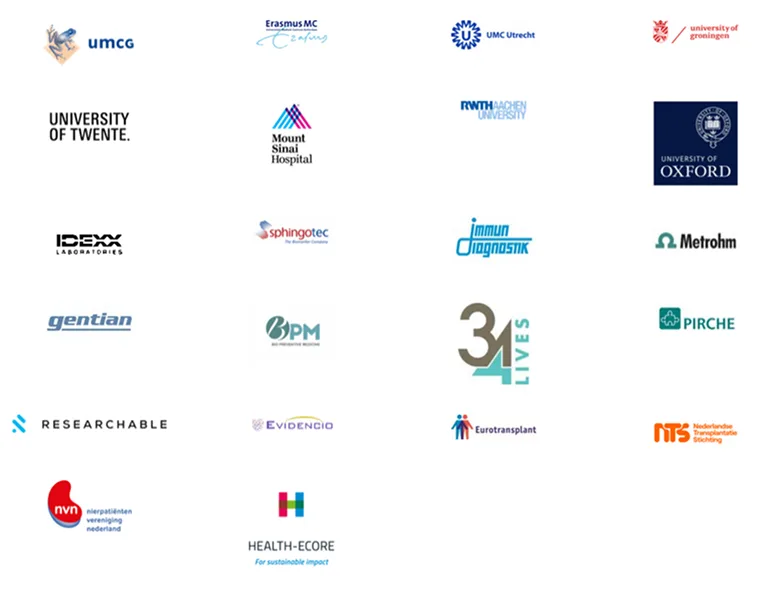
The ADORABLE consortium:
What does Researchable do?
In this project we are the technical backbone. Our task is to organise all data and technology in such a way that this project can be completed successfully.
Concretely, we focus on:
- Setting up secure test and data environments where PhD candidates and data scientists carry out their analyses. This ensures they can work efficiently and securely.
- Supporting the development of predictive models. We make sure the algorithm is robust and scalable, which guarantees the reliability of the results.
- Guiding the technical route to MDR/CE certification in collaboration with partners such as Evidencio. This certification is essential to be allowed to use the application in a medical environment.
- Leading stakeholder management to ensure that all parties collaborate effectively. This way we prevent miscommunication and stay aligned.
- Building a secure API that forms the connection between the algorithm, the NTS application and Evidencio.
The most important thing: what we build has to be genuinely usable in practice. Not a stand-alone trial, but a solution that benefits patients throughout the Netherlands.
Why is Researchable doing this?
Technology only becomes valuable when it genuinely helps people. With our expertise, we ensure that innovations do not stay locked away in the scientific silo, but actually land in healthcare. And that means: better chances for thousands of people who sometimes wait for years for a donor kidney.
The societal impact
The shortage of donor organs is significant, and every donor kidney counts. If we use data and AI to increase the chance that a donor kidney lasts many years longer, we make the entire care chain more sustainable. That means fewer re-transplants, less burden on patients and their families, and a smarter use of care capacity in the Netherlands.
Project ADORABLE therefore stands not only for technological progress, but also for societal gain: more quality of life, less pressure on healthcare and a better use of precious donor organs.
Stronger together
Collaboration is central: hospitals, universities, tech companies and patient organisations work together within project ADORABLE. The consortium is led by physician Martin de Borst (UMCG) and Dennis Hesselink, with partners such as Erasmus MC, the Nierstichting and the Dutch Transplant Foundation (NTS).
Frequently asked questions
What is project ADORABLE?
ADORABLE is a collaboration of more than 25 organisations that aims to better help people with kidney problems. The goal is to use data and smart software to better predict which donor kidney will last longest, so that every donor kidney is used to its full potential.
What are biomarkers and why are they important for kidney transplants?
Biomarkers are minuscule traces in blood or tissue that say something about the quality of a kidney. Together with machine learning, they help doctors to better estimate per patient which donor kidney works best and how long it will last.
What does Researchable do in project ADORABLE?
Researchable is the technical backbone of the project. We set up secure test and data environments, support the development of robust and scalable predictive models, build a secure API between the algorithm, the NTS application and Evidencio, and guide the route to MDR/CE certification.
Why is MDR/CE certification needed in this project?
MDR/CE certification is essential to be allowed to use the application in a medical environment. Researchable guides this technical route together with partners such as Evidencio, so that the solution becomes genuinely usable in practice.
What is the societal impact of ADORABLE?
By using data and AI to increase the chance that a donor kidney lasts longer, the entire care chain becomes more sustainable. That means fewer re-transplants, less burden on patients and families, and a smarter use of care capacity in the Netherlands.