In brief
- ISO 27001 is the standard for an information security management system. With ISO 27001 you protect the information around an AI system, such as training data, input and log files, insofar as it falls within the scope. ISO 27001 does not cover how the model behaves.
- ISO/IEC 42001, from December 2023, is a separate standard for the management of AI. According to ISO, ISO/IEC 42001 is the first standard for an AI management system.
- The AI Act requires high-risk AI systems to achieve an appropriate level of accuracy, robustness and cybersecurity, and the AI Act names vulnerabilities specific to AI, such as poisoning training data.
- An ISO 27001 certificate is a good foundation, but an ISO 27001 certificate is no proof that an AI system complies with the AI Act.
ISO 27001 covers the security of the information around an AI system: who can access it, where it is stored and how you handle incidents. The standard does not cover how the model itself behaves. For managing AI in your organisation there is ISO/IEC 42001; requirements for the system itself are set out in the AI Act, for high-risk systems.
What ISO 27001 says about an AI system
ISO/IEC 27001 is the standard for an information security management system, often abbreviated to ISMS. The current version is the third edition, from October 2022. The standard sets out the requirements such a management system must meet: you map out what information you have, what risks it faces, and how you control those risks.
An AI system consists largely of information: the data the model was trained on, the questions and documents users enter, the answers, the log files. What ISO 27001 asks of other information applies here too: confidentiality, integrity and availability. That makes the standard a logical foundation for an AI system.
What ISO 27001 does not cover for AI
ISO 27001 is not an AI standard. Whether a model is fair, whether it is accurate enough for its purpose, whether a human can intervene and whether you can explain how an outcome was reached: information security does not deal with these questions.
Even where security is concerned, the AI Act asks for more. Article 15 requires a high-risk AI system to be resilient against attempts by unauthorised third parties to alter its use, outputs or performance by exploiting vulnerabilities. The article names vulnerabilities specific to AI and requires, where appropriate, measures against:
- manipulating the training data (data poisoning);
- manipulating pre-trained components (model poisoning);
- input designed to make the model make a mistake (adversarial examples);
- attacks on confidentiality and flaws in the model.
ISO 27001 does not name these vulnerabilities. You add them to your risk assessment yourself.
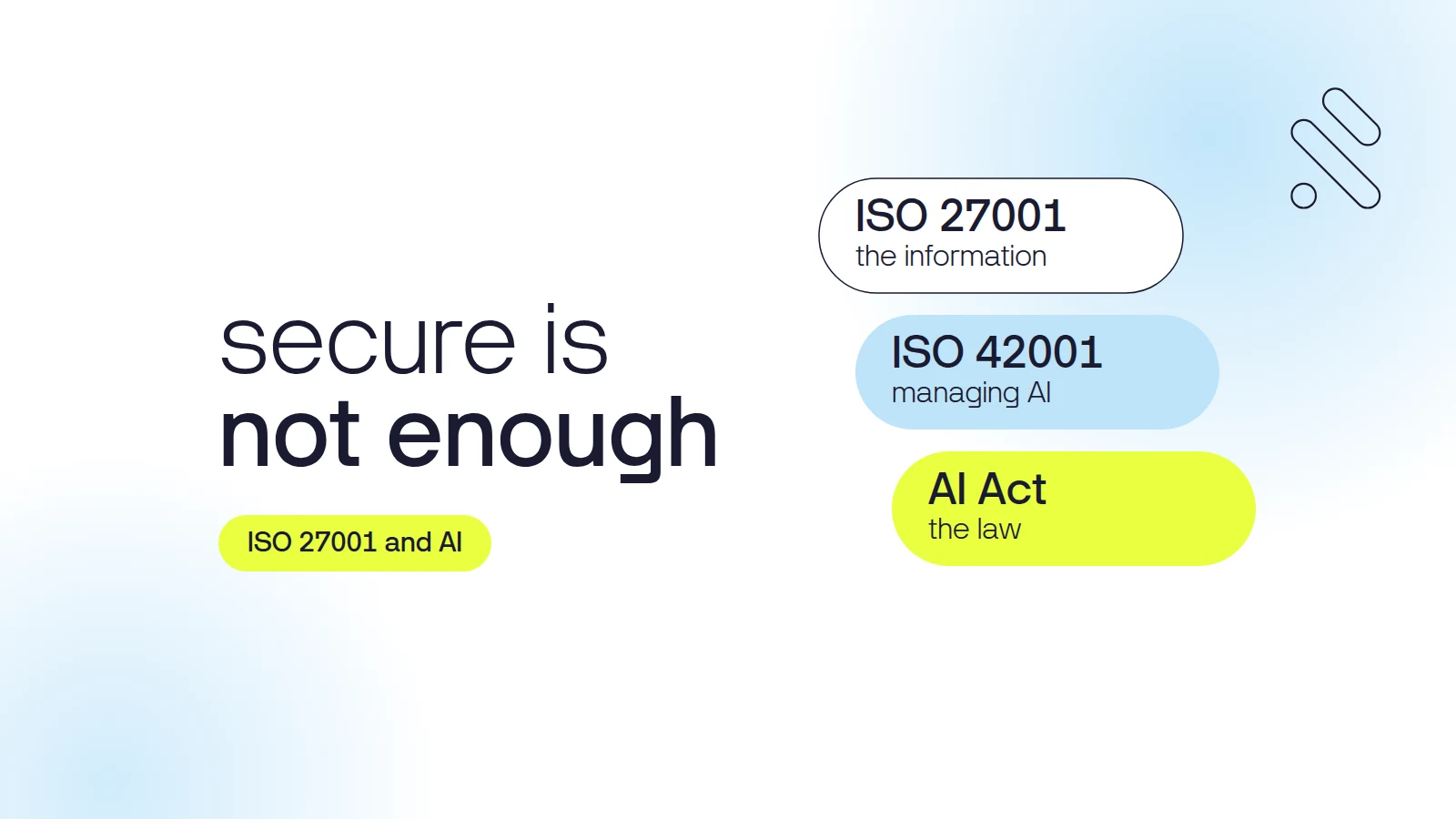
ISO 27001, ISO 42001 and the AI Act side by side
| Standard or law | What it is | Covers | Since or from | Mandatory |
|---|---|---|---|---|
| ISO/IEC 27001 | Standard for an information security management system | The information: confidentiality, integrity and availability | Third edition, October 2022 | No, a standard you can get certified for |
| ISO/IEC 42001 | Standard for an AI management system | Developing and using AI systems responsibly | First edition, December 2023 | No |
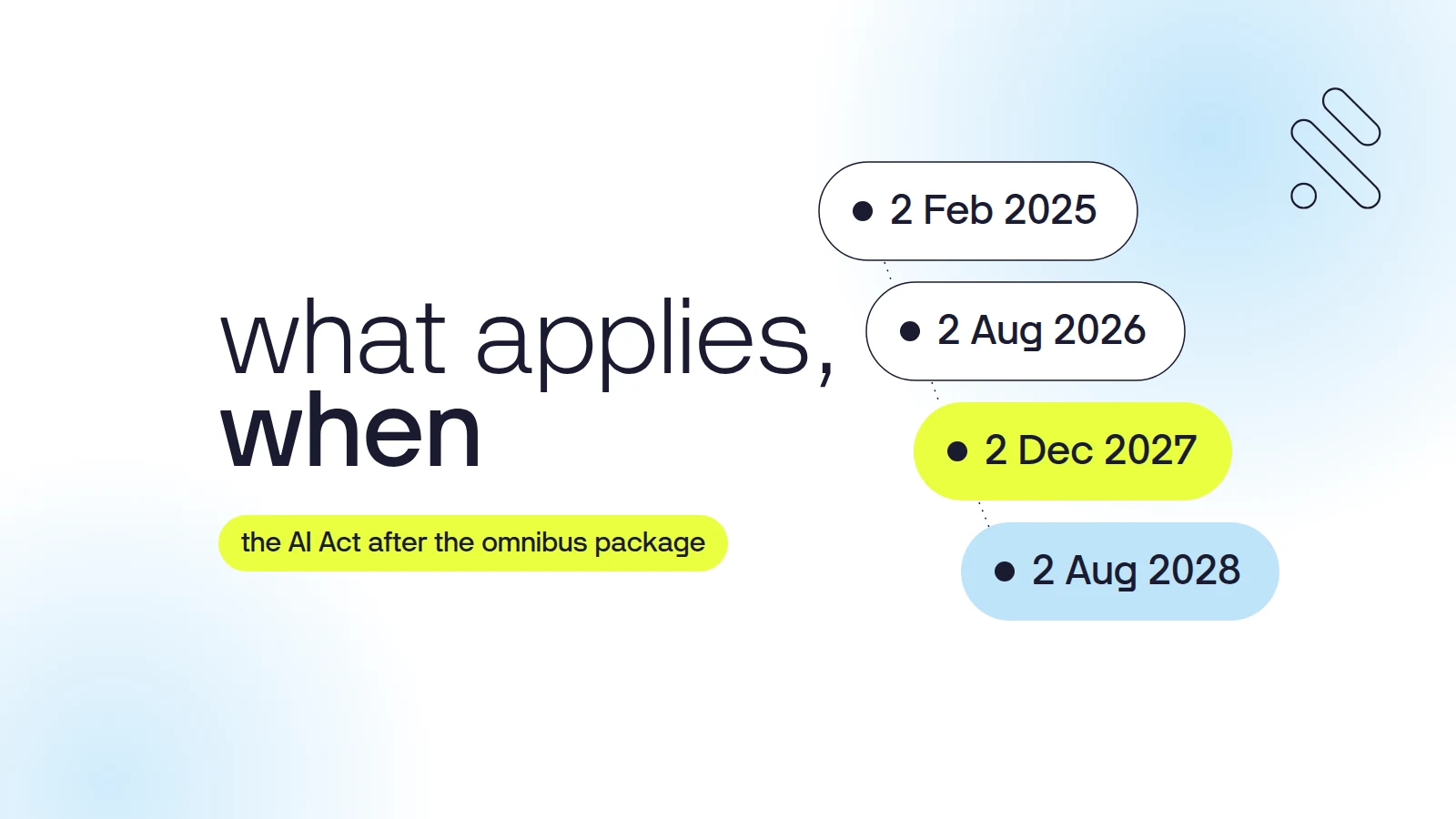
| AI Act | European law | Requirements for AI systems and for those who provide or deploy them | In force since 1 August 2024; requirements for high-risk systems from Annex III from 2 December 2027 | Yes |
ISO/IEC 42001 is intended for organisations that provide or use products or services with AI. ISO calls it the first standard for an AI management system. When each part of the AI Act takes effect is set out in our AI Act timeline.
Is an ISO 27001 certificate enough for the AI Act?
No. The AI Act names a few situations in which a high-risk system is presumed to meet requirements. Two of these run through a standard or certificate. The first is a harmonised standard whose reference has been published in the Official Journal of the European Union, insofar as that standard covers the requirements (Article 40). The second is a certificate or statement of conformity for the AI system under a European cybersecurity scheme, and then only for the cybersecurity requirements of Article 15 and insofar as the certificate covers them (Article 42(2)). Since the omnibus package, a system can also meet those cybersecurity requirements through the European regulation on products with digital elements (Article 42(3)).
An ISO 27001 certificate is something else: it concerns an organisation's management system, not an AI system. It shows that your information security management system meets the standard, and that helps with parts of the quality management system that Article 17 requires of providers of high-risk AI systems. It does not replace the requirements for the system itself.
How we combine ISO 27001 and AI
Researchable is ISO 27001:2022 certified. All projects fall within the scope of that certification, from data architecture to the development of AI products, as stated on our page about ISO 27001. An independent party audits this every year, with a recertification every three years.
When we moved from the 2013 version to ISO 27001:2022 in 2024, we wrote that we also focus on new regulation such as the AI Act.
What to arrange for AI alongside ISO 27001
- 1Include your AI systems in the scope and the register of your ISMS: training data, models, input and log files are information you protect.
- 2Treat the supplier of a model like any other supplier. Record where your data is processed and what happens to your input.
- 3Add the vulnerabilities from Article 15 of the AI Act to your risk assessment.
- 4Also set up the management of AI: who decides on its use, how you test whether it works and who intervenes. ISO/IEC 42001 provides a framework for this.
- 5Determine whether a system is high-risk. If so, the requirements of the AI Act apply to it (for Annex III from 2 December 2027), and an ISO 27001 certificate does not change that.
Frequently asked questions
Is ISO 27001 enough to comply with the AI Act?
No. ISO 27001 is about information security; for high-risk AI systems the AI Act also sets requirements for accuracy, robustness, human oversight and documentation, among other things. An ISO 27001 certificate concerns an organisation's management system; the presumption of conformity in the AI Act depends on standards and certificates for the AI system itself. The certificate is a foundation for security, though, and helps with parts of the quality management system that the law requires of providers of high-risk systems.
What is the difference between ISO 27001 and ISO 42001?
ISO/IEC 27001 is the standard for an information security management system and is about the confidentiality, integrity and availability of information. ISO/IEC 42001 is a standard for an AI management system and is about developing and using AI systems responsibly. The current ISO 27001 dates from October 2022, ISO 42001 from December 2023.
Is ISO 42001 mandatory?
No. ISO/IEC 42001 is a standard, not a law. Organisations that provide or use AI can apply the standard voluntarily to set up the management of AI. Legal requirements for AI systems are set out in the AI Act, among other places.
What does the AI Act require for the cybersecurity of AI systems?
Article 15 of the AI Act requires high-risk AI systems to achieve an appropriate level of accuracy, robustness and cybersecurity and to maintain it throughout their lifecycle. They must be resilient against attempts by unauthorised third parties to alter their use, outputs or performance by exploiting vulnerabilities in the system. Where appropriate, this includes measures against poisoning training data, among other things.
Does an AI system fall within the scope of ISO 27001?
That depends on the scope an organisation has set for its management system. At Researchable, all projects fall within the scope of the ISO 27001:2022 certification, including the development of AI products.